Share the load.
Explore head, neck and spinal positioning alongside hips, shoulders, knees, ankles and wrists. The aim is to reduce excessive joint strain and compressive loading.
Physiotherapy focused on your posture, breathing and movement to help you move comfortably and get back to your daily activities.
New and returning patients welcome · Thornhill, Ontario
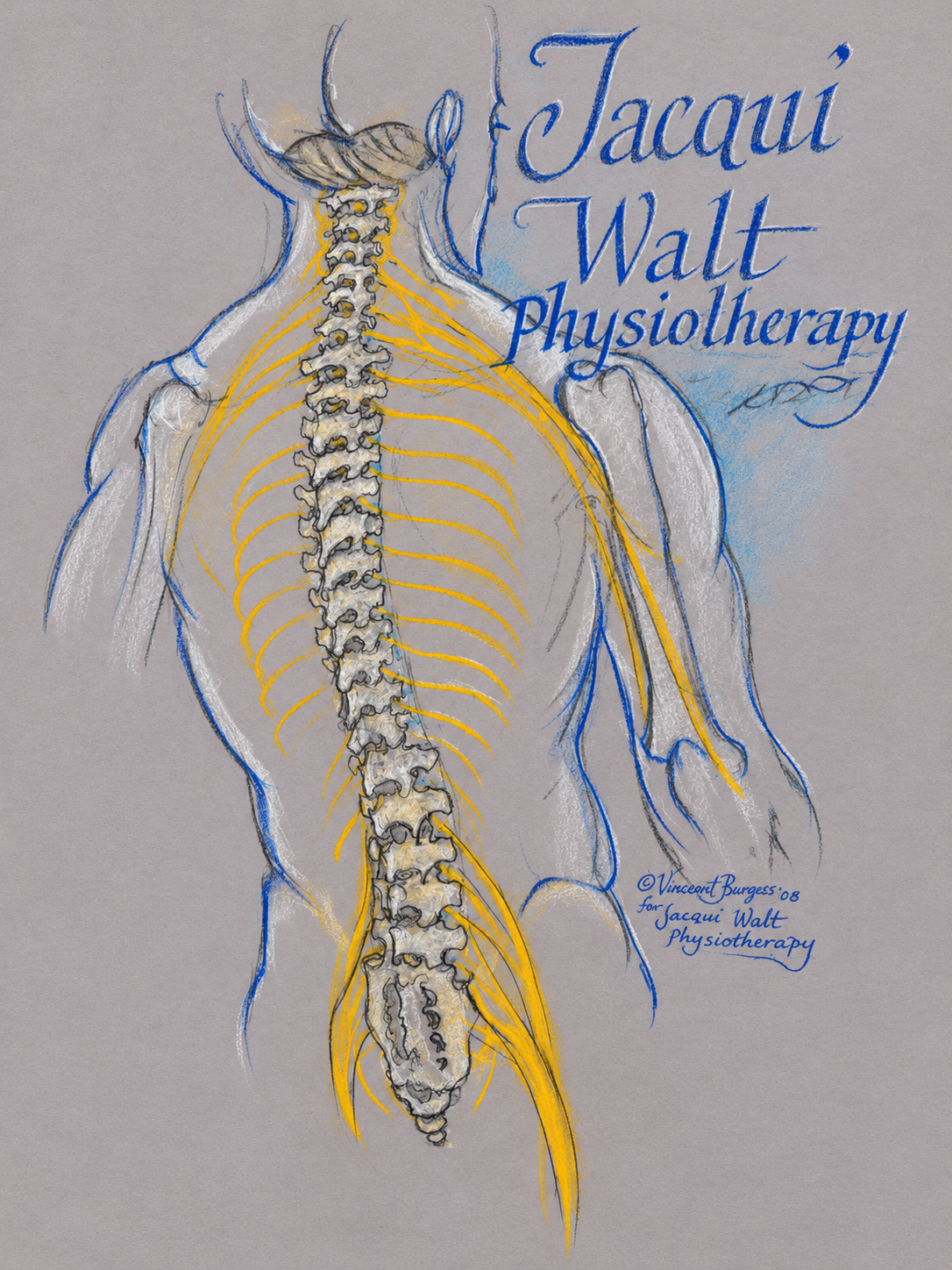
Your neck, skull (cranium), rib cage, diaphragm and pelvis work as a connected system.
Jacqui draws on her PRI training to assess how posture and movement patterns may contribute to pain or strain. Treatment includes specific repositioning and muscle retraining to help your body move more freely with less compensation.
Explore head, neck and spinal positioning alongside hips, shoulders, knees, ankles and wrists. The aim is to reduce excessive joint strain and compressive loading.
Consider how cranium and neck positioning relate to breathing, and how diaphragm and rib positioning interact with spinal orientation and pelvic floor function.
Retrain coordinated, alternating movement to reduce reliance on substitution. Bring awareness and practical posture adjustments into walking, sitting, lifting and daily activities.
Where indicated, Jacqui collaborates with a dentist to assess whether a mouth appliance may assist head and neck positioning, balance and stability. Any appliance is prescribed and fitted by the dentist as part of coordinated care.
Your neck, mid-back and lower back form a connected column. Assessment explores how these regions move alongside your rib cage and pelvis.
The diaphragm sits beneath the lungs. Jacqui considers breathing mechanics together with rib cage and pelvic positioning as part of your movement assessment.
Feeling support through your feet helps you explore weight transfer. Gait retraining focuses on coordinating movement as you alternate from one side to the other.
Simplified educational illustrations, not to scale. Assessment and treatment are individualized.
Assessment starts with your symptoms, history and goals.
Low back or SIJ pain, hip pain or popping, disc-related symptoms, spinal stenosis and scoliosis, including teenage scoliosis.
Acute or chronic neck and upper trapezius pain, whiplash-related symptoms, headaches, shoulder mechanics and clenching or TMJ concerns.
Pelvic floor concerns, prenatal and postpartum needs, with attention to breathing, rib cage and pelvic coordination.
Sprains, strains, osteoarthritis and loading concerns of the hips, shoulders, knees, ankles or wrists; plantar fascia, Achilles and forefoot symptoms; footwear guidance.
Foot awareness, shifting your centre of mass, gait difficulties and neuromuscular coordination through alternating, reciprocal movement.
Sports injuries, muscle imbalances and movement impairments; efficient muscle recruitment, practical posture adjustments and less gripping through the jaw, toes or fists.
Treatment aims to improve comfort and function. It does not guarantee prevention or reversal of injuries or structural spinal conditions. Referrals are made when appropriate.
Jacqui has owned and operated her Thornhill physiotherapy clinic for 26 years. Her background includes 15 years as a national-level gymnast and 10 years in competitive bodybuilding. She brings an athlete’s understanding of strength and movement to her clinical work.
She has studied with the Postural Restoration Institute® since 2013, including more than 10 years of study with founder Ron Hruska, MPA, PT. Her work integrates pelvis, diaphragm, spine, neck and cranium positioning with breathing, muscle balance and reciprocal movement.
Jacqui takes time to explain your movement patterns and gives you a personalized home exercise program, along with practical advice for everyday posture and activities.
Start with an individual assessment ↗Jacqui will explain your assessment and treatment plan in plain language.
Jacqui will discuss your symptoms, history and goals, then assess your breathing, joint movement, posture, balance or walking as needed. Jacqui guides individualized treatment and a home exercise plan, with reassessment and self-management advice for daily activities. Bring comfortable clothing, everyday shoes and relevant information about previous care.
The goal is to help your body move between positions with less muscle tension and compensation. It does not mean holding a rigid position or having perfectly symmetrical posture. PRI education explores relationships between postural patterns, breathing and movement; Jacqui combines it with her clinical assessment.
Within a PRI-informed assessment, Jacqui considers relationships between head and neck positioning, the jaw, rib movement and diaphragm function. This may help guide strategies for reducing reliance on accessory neck muscles during breathing. Where indicated, she collaborates with a dentist about an oral appliance to support the plan.
Footwear and awareness of contact through the feet can inform weight transfer, balance and walking strategies. Jacqui helps you practise alternating support rather than repeatedly overloading one area.
Jacqui works with prenatal, postpartum and pelvic floor concerns. Recommendations are selected for your symptoms, stage of recovery and individual assessment.
The Postural Restoration Institute® is an educational institute founded by Ron Hruska in 2000. Explore PRI’s patient resources ↗ or read about Ron Hruska ↗.
Request an appointment with Jacqui. Share your preferred day and time, and she will be in touch to confirm availability.
Prefer to call or email directly? Both are welcome for new and returning patients.